This article explores the possibility of a new future for naval base development and transformation.
Case study: Rosyth Europarc
Repositioning a former naval base for a new industrial future
Introduction
Few regeneration projects carry the scale, complexity, and symbolism of transforming a former military installation into a thriving commercial enterprise.
Situated on the north shore of the Firth of Forth, Rosyth had long played a critical role in Britain’s naval history. Yet as defence requirements evolved and military operations contracted, significant areas of the vast naval estate faced an uncertain future.
The challenge was not simply one of redevelopment, but reinvention.
A consortium of public and private sector partners came together under the Rosyth Europarc initiative with an ambitious vision: to reposition the former naval base as a modern centre for industry, manufacturing, maritime operations, and investment.
To communicate that vision and attract support, investors, businesses, and stakeholders, the consortium appointed IDEAS.
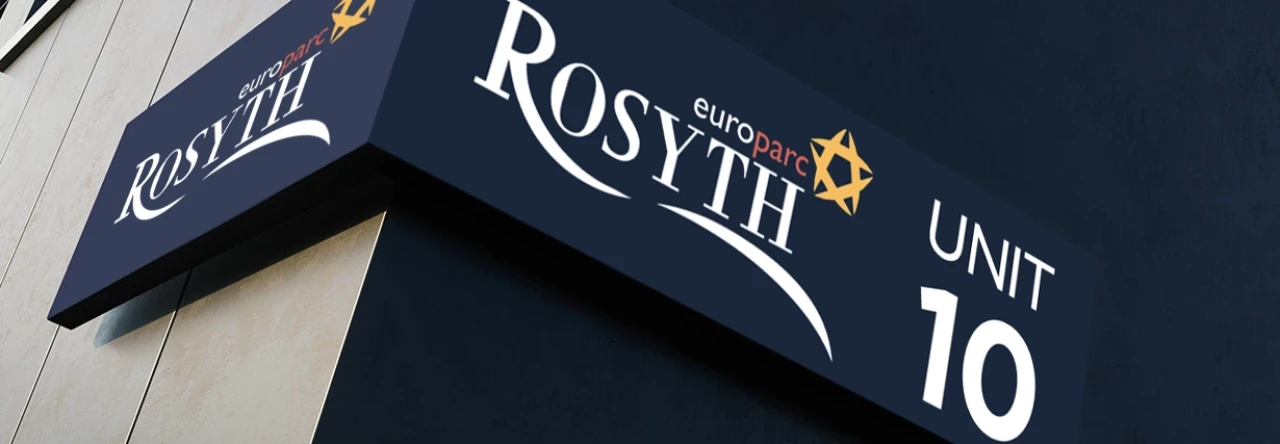
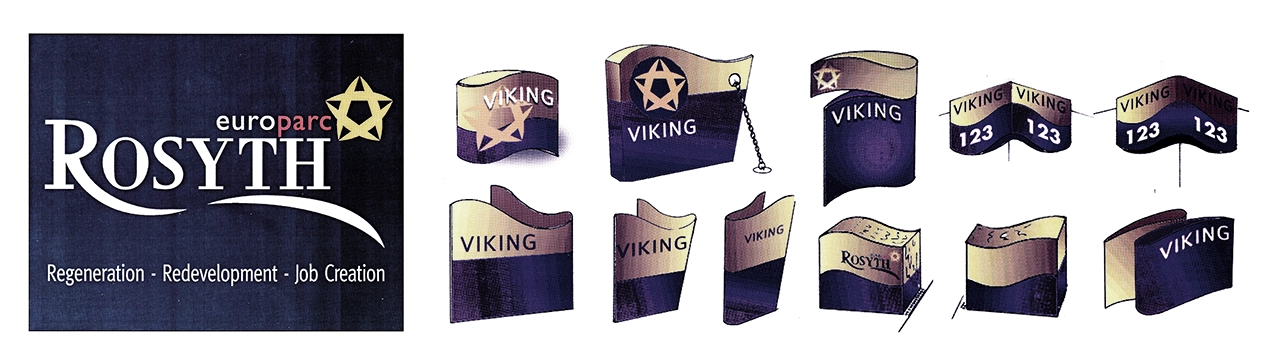
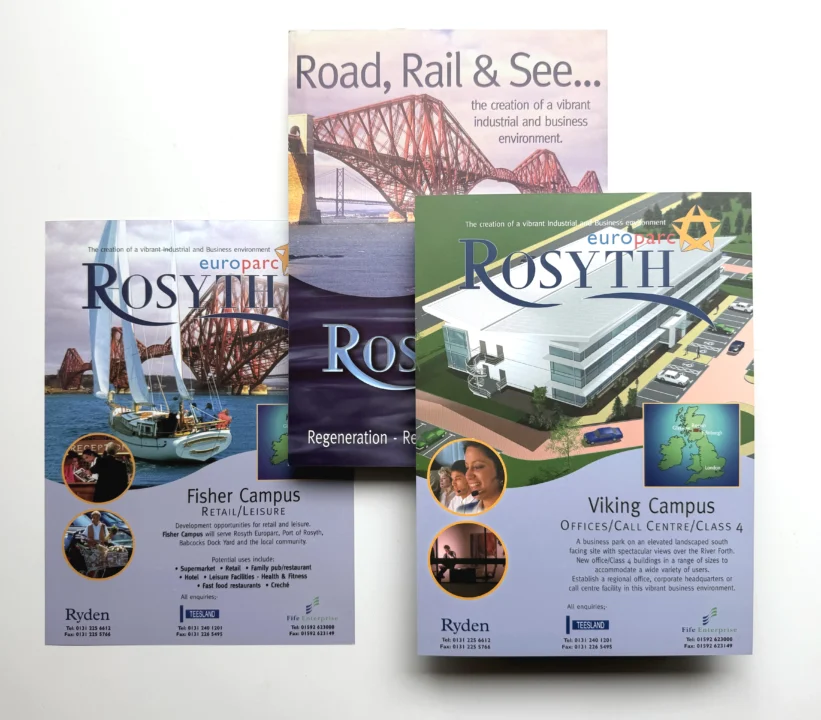
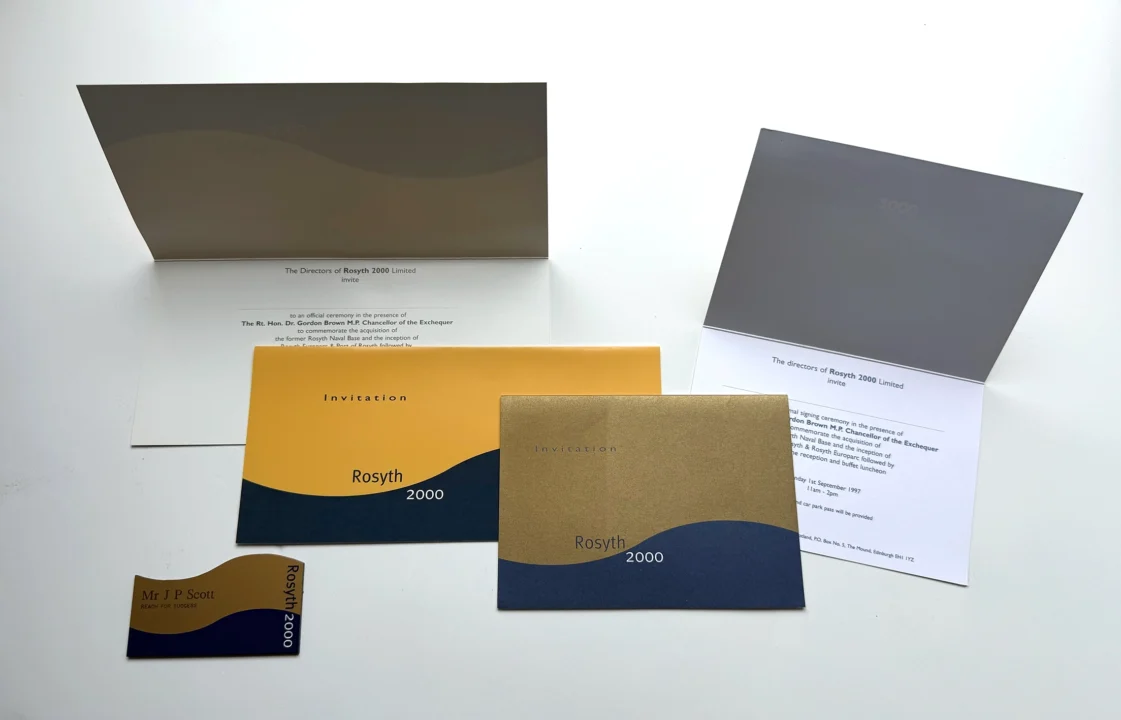
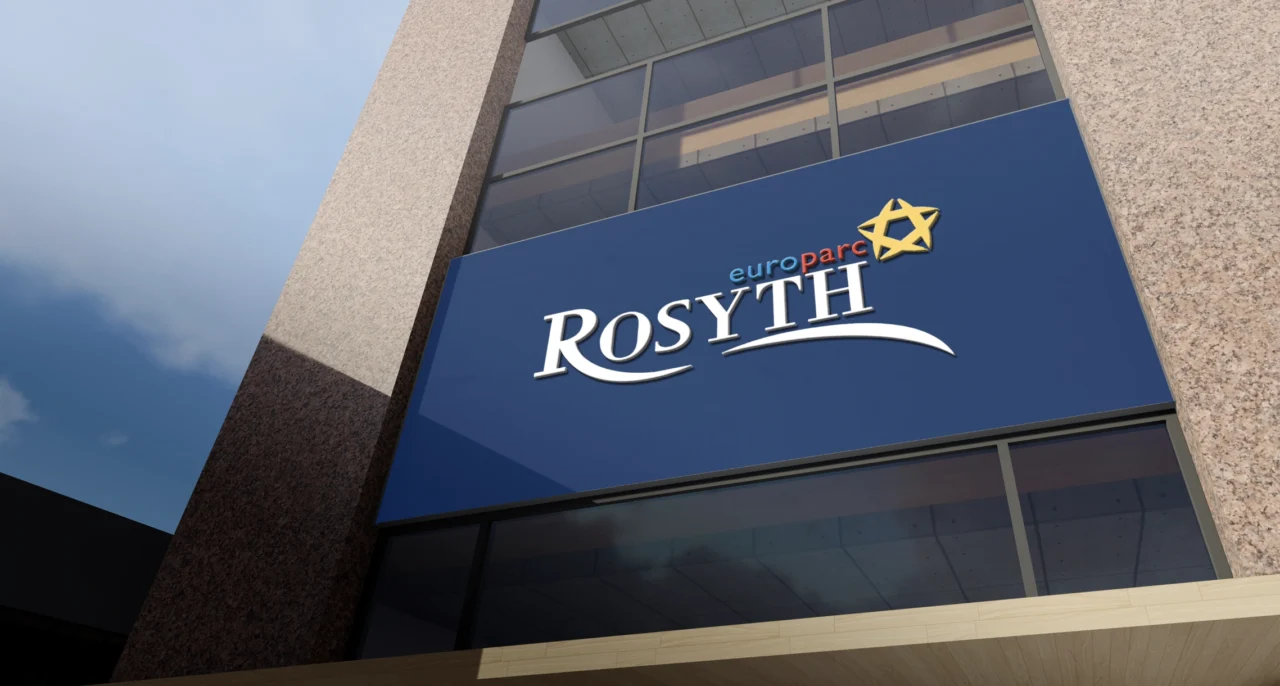
Working closely with project leaders, IDEAS developed the brand identity, marketing strategy, launch communications, and promotional materials that helped introduce Rosyth’s next chapter to the marketplace.
The Challenge
Regeneration projects often struggle to escape perceptions of the past.
While Rosyth possessed exceptional infrastructure, deep-water access, extensive industrial facilities, and strategic transport links, many external audiences continued to associate the site solely with its military heritage.
The consortium needed to reposition Rosyth as a destination for commercial opportunity rather than defence dependency.
This required a clear and compelling proposition capable of attracting investors, occupiers, strategic partners, and political support while instilling confidence in a future that was still taking shape.
The challenge was therefore to transform a complex redevelopment programme into a credible, marketable, and inspiring vision for economic growth.
Our Intervention
Under the creative direction of Don Jack, IDEAS became the communications and brand development partner for Rosyth Europarc.
The brief extended far beyond graphic design. IDEAS was tasked with creating an identity and narrative capable of expressing both the scale of the opportunity and the confidence of the organisations driving it.
The programme included:
Brand creation and positioning – establishing a professional identity that reflected ambition, credibility, and long-term potential.
Corporate communications – creating materials that clearly articulated the vision and commercial opportunities available at Rosyth.
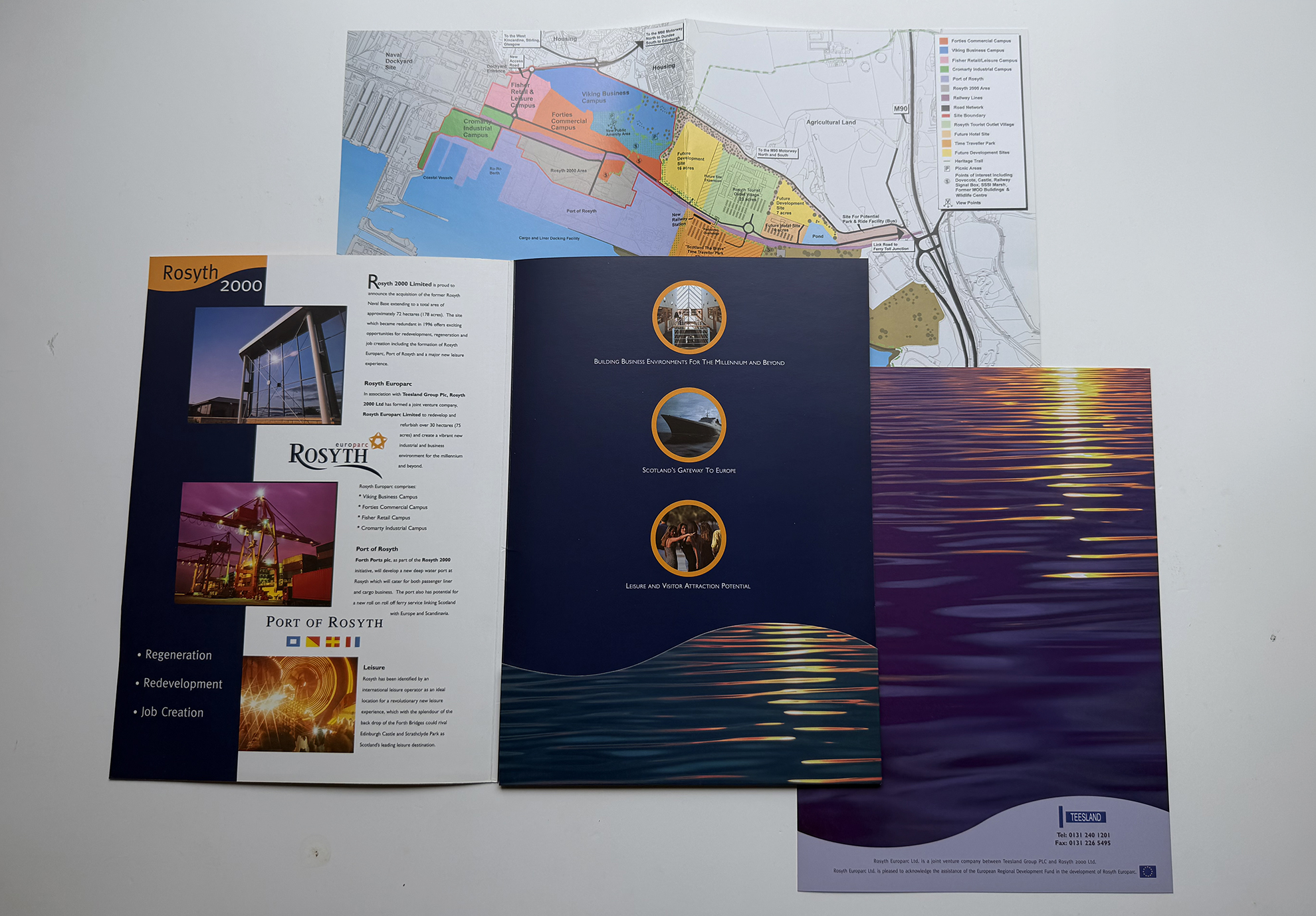
Marketing brochures and investment collateral – communicating the site’s capabilities to prospective occupiers, investors, and stakeholders.
Press and media relations materials – supporting public announcements and generating awareness of the redevelopment programme.
Launch campaign development – creating a coordinated introduction for the project across multiple audiences.
Promotional merchandise and supporting assets – extending the brand into events, exhibitions, and stakeholder engagement activities.
Throughout the process, IDEAS ensured that every communication reinforced a simple message: Rosyth was no longer merely a former naval base; it was becoming one of Scotland’s most significant industrial regeneration opportunities.
Campaign & Strategy
The communications strategy focused on creating confidence.
At a time when large-scale regeneration projects often faced scepticism, IDEAS worked to demonstrate the practical and economic benefits of redevelopment while presenting Rosyth as a location uniquely positioned for future growth.
The campaign combined:
Investment-focused storytelling that highlighted strategic advantages and long-term opportunities.
Corporate branding and communications designed to inspire confidence among commercial audiences.
Media engagement that elevated awareness of the redevelopment programme and its economic significance.
Stakeholder communications that aligned partners around a common vision.
Exhibition and promotional materials that provided a consistent and professional public presence.
Rather than focusing on what Rosyth had been, the strategy concentrated on what it could become.
What We Delivered
| Strategy & Insight | Creative & Delivery |
|---|---|
| Regeneration positioning strategy | Brand identity roll-out |
| Stakeholder communications planning | Corporate communications materials |
| Investment marketing strategy | Marketing brochures and collateral |
| Public relations support | Press packs and media materials |
| Launch campaign planning | Event and promotional assets |
| Long-term destination positioning | Merchandise and brand applications |
Results & Legacy
The transformation of Rosyth stands as one of Scotland’s most significant industrial regeneration success stories.
Following redevelopment and continued investment by Babcock International Group, the site evolved into what is now recognised as a major commercial port, manufacturing centre, engineering hub, and maritime services facility.
Today, the site encompasses more than 300 acres of industrial, manufacturing, repair, and waterfront infrastructure, supporting a wide range of commercial activities.
Rosyth has also achieved international recognition through its role in the assembly and integration of the Royal Navy’s Queen Elizabeth-class aircraft carriers — among the largest and most complex engineering programmes ever undertaken in the United Kingdom.
What began as an uncertain post-defence redevelopment project became a thriving centre of industrial activity, employment, and investment.
While infrastructure and commercial leadership drove the physical transformation, successful regeneration also depended upon creating belief in the vision itself.
By helping define and communicate that vision, IDEAS played a role in repositioning Rosyth from a former naval base into a modern symbol of industrial renewal and economic confidence.
The project remains a powerful example of how strategic branding and communication can support regeneration by turning possibility into credibility, and ambition into momentum.
HUNGRY FOR an IDEAS ® rebrand?
We’d love to talk to you
Drop us a line or
Schedule a complimentary 10-minute discovery call with us today here!

CLIENTS (just a few):