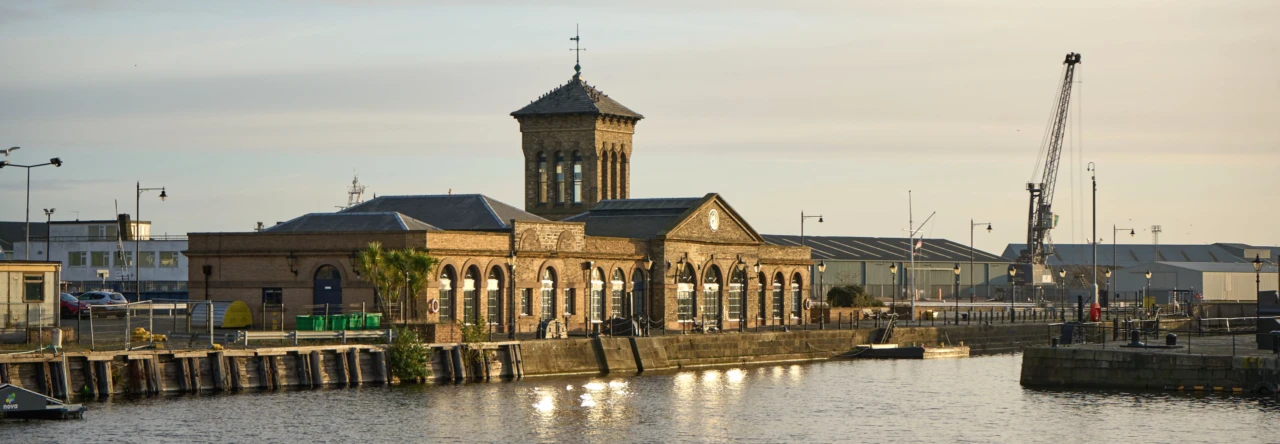
Forth Ports Leith – Edinburgh’s waterfront is a vibrant gateway to Scotland’s capital, offering visitors a blend of maritime history and modern attractions.
Forth Ports – Edinburgh’s Waterfront – Case Study
Building consensus for the future of Edinburgh’s waterfront
Introduction
Few places embody the relationship between heritage and progress quite like the Port of Leith.
For centuries, Leith has served as Edinburgh’s maritime gateway — a place of commerce, industry, migration, and cultural exchange. Yet as global trade patterns evolved and Scotland accelerated its ambitions for renewable energy, the waterfront found itself at the centre of a new chapter in its history.
Forth Ports recognised that successful regeneration would require more than infrastructure investment and planning applications. It would require a compelling vision, meaningful engagement, and the confidence of local communities, businesses, stakeholders, and decision-makers.
To help communicate that future, Forth Ports appointed IDEAS.
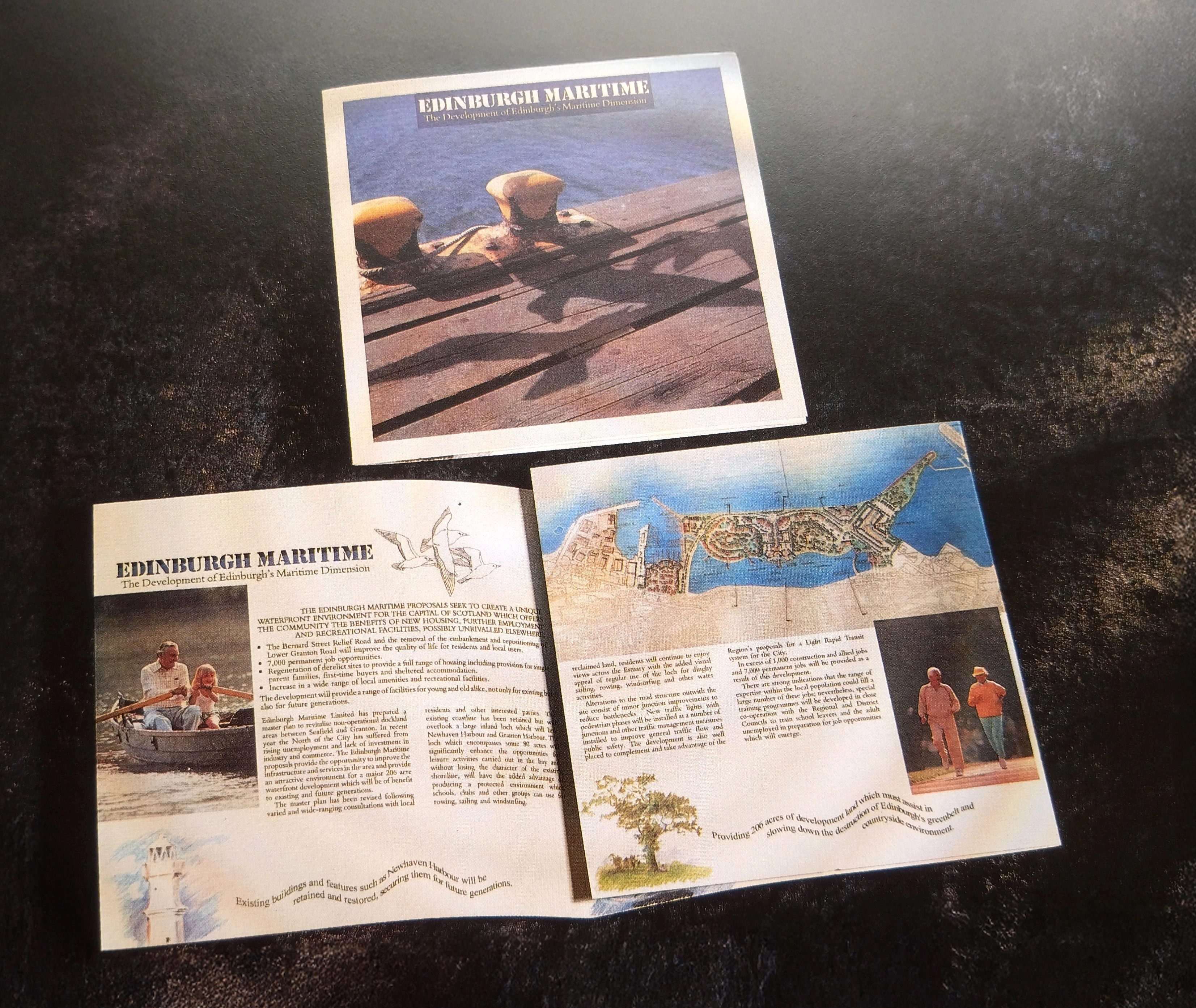
Working alongside the port authority and its wider project teams, IDEAS developed the brand narrative, public engagement strategy, visual communications, consultation materials, and placemaking tools needed to transform complex development proposals into a shared vision for Leith’s future.
The Challenge
Waterfront regeneration projects rarely fail because of engineering.
They fail because people struggle to understand them.
The scale and complexity of the proposed developments at Leith were significant. Plans encompassed residential and commercial opportunities, public realm improvements, enhanced maritime operations, renewable energy infrastructure, and long-term economic growth.
For local communities, however, such projects can often feel overwhelming. Technical reports, planning documents, competing stakeholder interests, and large volumes of public feedback risk obscuring the broader benefits and opportunities.
The challenge was therefore twofold:
To articulate a clear and inspiring vision for Leith’s future.
To create a constructive dialogue capable of transforming diverse stakeholder feedback into positive, actionable outcomes.
Our Intervention
Under the creative direction of Don Jack, IDEAS became a key communications and placemaking partner throughout the regeneration process.
The role extended far beyond traditional design services. IDEAS acted as translators between technical development proposals and public understanding, helping communities visualise how investment could enhance the waterfront while respecting Leith’s identity and heritage.
The programme included:
Brand and vision development – creating a coherent narrative for the future of the port and surrounding waterfront.
Community and stakeholder engagement – designing consultation materials and facilitating meaningful public participation.
Public exhibitions and meetings – developing presentations, displays, and communication tools that encouraged dialogue and transparency.
Future visioning and visualisation – producing illustrations, concepts, and imagery that transformed complex plans into understandable and inspiring possibilities.
Planning support communications – helping communicate key benefits, opportunities, and responses to stakeholder concerns.
Exhibition and information materials – ensuring consistency across all public-facing engagement channels.
Perhaps most importantly, IDEAS helped organise, interpret, and compartmentalise extensive stakeholder feedback, transforming what could have become a confusing volume of competing opinions into a structured framework that informed decision-making and strengthened the planning process.
Campaign & Strategy
The communications strategy focused on helping people understand not simply what was being proposed, but why it mattered.
Rather than presenting regeneration as a collection of separate developments, IDEAS framed the programme as a long-term transformation of Leith’s waterfront economy, public realm, and international significance.
The approach combined:
Vision-led storytelling that connected heritage with future opportunity.
Accessible public engagement materials that translated technical information into understandable language and imagery.
Visual placemaking tools that allowed stakeholders to see and discuss future scenarios.
Community consultation programmes that encouraged constructive participation.
Exhibition and event communications that created visibility and momentum around the proposals.
The result was a more collaborative planning environment, helping stakeholders move from opposition and uncertainty towards understanding and informed discussion.
What We Delivered
| Strategy & Insight | Creative & Delivery |
|---|---|
| Regeneration communication strategy | Brand and vision development |
| Stakeholder engagement planning | Future vision illustrations |
| Public consultation strategy | Development visualisations |
| Community communications framework | Exhibition and display materials |
| Planning support communications | Public meeting presentations |
| Feedback analysis and interpretation | Information and consultation collateral |
Results & Legacy
The Leith waterfront regeneration programme has become widely recognised as an example of effective placemaking, stakeholder engagement, and long-term destination development.
The foundations laid through the planning and consultation process helped support a series of transformational projects that continue to reshape the waterfront and strengthen Leith’s role within Scotland’s economy.
Among the most significant developments is the approval of the Harbour 31 waterfront development, a 4.7-acre mixed-use site approved by the City of Edinburgh Council in 2026, creating new residential opportunities alongside commercial space for local businesses.
At the same time, Leith has established itself as a major centre for renewable energy investment. More than £50 million of private funding has been invested in marine access, infrastructure, and heavy-lift facilities, supporting the growth of the wider 175-acre Leith Renewables Hub and its role within the Forth Green Freeport initiative.
Today, the port serves as the primary logistics and foundation handling base for the 72-turbine Inch Cape offshore wind farm, positioning Leith at the forefront of Scotland’s transition towards renewable energy.
Alongside this industrial transformation, Leith continues to welcome thousands of cruise passengers each year, maintaining its historic role as Edinburgh’s maritime gateway while embracing an entirely new economic future.
For IDEAS, the project demonstrated the power of placemaking as a tool for regeneration.
By helping communities understand change, participate in its development, and see the opportunities it creates, IDEAS contributed to a process that has become a textbook example of how communication, engagement, and vision can unlock successful waterfront transformation.
It stands as proof that the most important structures in regeneration are often not the buildings themselves, but the understanding, trust, and shared ambition that make them possible.
HUNGRY FOR an IDEAS ® rebrand?
We’d love to talk to you
Drop us a line or
Schedule a complimentary 10-minute discovery call with us today here!
CLIENTS (just a few):